024: The Work After | 8 – 14 June
Psychedelics and what it actually takes for integration, how to be normal, the sad wives of AI, and Australian offshoring's real costs

This week was mostly finalising marking — psychology assessments, which felt fitting given everything else that was happening on the edges of it. On Friday night, I checked out a venue for my graduation party with the gals, and we had dinner after. Then on Saturday, with Adele as my sober sitter, I took a heroic dose of psilocybin. I'm still sitting with it, still journalling, and not quite ready to say much more than: it was transformative, it was not recreational, and I trusted the process.
🧘🏻♀️ HEALTH, FITNESS, & LONGEVITY
Joan Westenberg on not being obsessed with everything — and how to just be normal about things. A good read for anyone who has trained themselves to react to everything.
The internet hates proportion because proportion slows the machine down. A proportionate person is harder to manipulate. They don’t instantly buy the supplement, join the mob, share the outrage, adopt the label, or panic at the headline. They have a buffer between stimulus and response... A lot of what passes for conviction is poor emotional regulation. A lot of what passes for discipline is anxiety. A lot of what passes for moral clarity is group belonging. A lot of what passes for being informed is being repeatedly agitated by people who profit from repeated agitation.
Psychedelics
As mentioned above, I took a heroic dose of psilocybin on Saturday with Adele as my sober sitter. I’m not going to say much here yet — I’ll discuss it with people once I’ve done more journalling and reflection. Overall, it was a transformative experience, but not a “fun trip” in the recreational sense. I trusted the universe, I trusted the process, and I was safe.
The Carhart-Harris Lab at UCSF
Thanks to Reece (a friend and qualified psych who studyed at my uni) — who is Head of Training and Education at Mind Medicine Australia — for pointing me towards this lab. Reece recently appeared on a webinar: From Research to Practice: A Journey into Psychedelic-Assisted Therapies and Emerging Career Paths if you are interested in that:
The Carhart-Harris Lab is run by Dr Robin Carhart-Harris, a researcher in human neuroscience and psychopharmacology, interested in how psychedelics affect the brain and their potential as treatments for conditions like depression. They operate on Open Science principles — open access, open data, open methods — which I love.
Check out their Papers | Video Library | Interviews
Current studies include:
Set and Setting
Psilocybin vs. SSRI for Depression
UCSF CANOPY Project
INSIGHT 2: Psilocybin fMRI Study
Psychedelic Creativity Study
PUMA — Psychedelic Use and the Mental Health of Adolescents
I joined the UCSF CANOPY Project to add my IRL experience to the study. It’s an online study investigating the effects of psychedelic substance use in real-world settings, from initial intention through to the psychological, emotional, and behavioural changes that follow.
A peer-support telephone helpline focused on reducing harms from non-clinical psychedelic use. Worth knowing about.
A peer-based service for compassionate crisis support. Their four principles of psychedelic care are important:
Safe space
Sitting, not guiding
Through, not down
Difficult is not necessarily bad
They also have some cool downloads on their site.
Integration Station — MAPS (Mulitdiciplinary Association for Psychedelic Studies)
The main thing I’ve been working on since the weekend is integration: the intentional, active process of translating the lessons from a psychedelic experience into daily life. It covers both internal work (mind, body, spirit) and external work (lifestyle, social relations, the natural world).
Why does this matter? Bathje, Majeski, and Kudowor (2022) put it well in their paper Psychedelic integration: An analysis of the concept and its practice (Frontiers in Psychology):
…integration requires active effort to revisit and work with psychedelic experiences and content that emerges from them. Without such active effort, valuable lessons tend to fade, and difficult experiences can reinforce traumas or existing patterns and defenses. Contrary to common belief, rather than doing the healing for us, psychedelics may give us an experience of and orientation toward wholeness, along with insight into the barriers and misalignments that will need to be addressed to continue toward or maintain wholeness.
Their synthesised model of integration covers practices across themes including: artistic/creative, music/singing, movement/somatic, diet/health practices, quiet time/downtime, journalling, therapy/mind focus, meditation/mindfulness, nature, creating space/ritual, spiritual/existential, dreamwork/symbolic interpretation, community/activism, and relational/interpersonal.
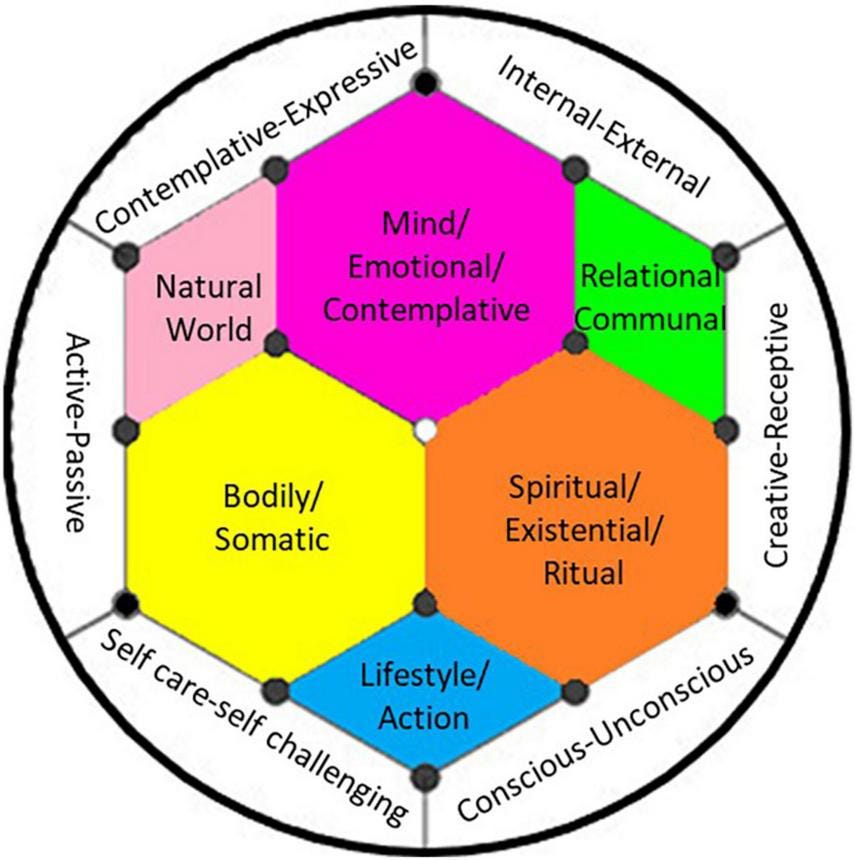
The continuums of integration practices are:
Contemplative <–> Expressive
Internal <–> External
Creative <–> Receptive
Conscious <–> Unconscious
Self Care <–> Self Challenging
Active <–> Passive
I’m working through the MAPS Integration Workbook at the moment. I’m reasonably solid across most of these practices generally, but I’m focusing on making them more conscious and deliberate right now.
And yes — Bryan Johnson did a video on taking the same dose:
♫ MUSIC
Megasound - “Supersize”
After watching “Josie and the Pussycats” together, Kerry and Chris from Bad Bad Hats joined Elana from Party Nails to form a new band, Megasound.
This is their first song from their upcoming album
They also have a Substack - it seems to be the new thing lately!
Kate Bush - Lily
There was a lot of music in my psychedelic process. And this song by Kate Bush was my north star - as the album has been in the past. Lily is from 1993 and starts with a blessing below from spiritual healer, Lily Cornford, who ran the Maitreya School and Healing Centre (their focus was on colour healing), who Kate was friends with in the 90s.
Oh thou, who givest sustenance to the universe
From whom all things proceed
To whom all things return
Unveil to us the face of the true spiritual sun
Hidden by a disc of golden light
That we may know the truth
And do our whole duty
As we journey to thy sacred feet
This is a clip of the video from the 1993 movie The Line, The Cross and The Curve, (see 18:13) where Kate asks Lily for help and she guides her through “singing back the symbols”, and protection from the four angels (Gabriel, Raphael, Michael, Uriel) by using an evocation ritual (part of the Lesser Ritual of the Pentagram).
Pinegrove - Everything So Far
And, on the ride home with Adele, when I was getting back into my body, Pinegrove eased me into the real world. I had all their albums and live albums on shuffle on my iPod Nano 7th generation, but here’s a great start to get into them via this album:
Buy this and listen to their other albums on Bandcamp:
🗳️ POLITICS
Where Australian jobs actually go — Offshore Watch
Companies say offshoring cuts costs, improves service, and keeps them competitive. The Australian evidence tells a different story.
Offshoring operates through deliberately opaque structures: GCC (Global Capability Centre), BPO (Business Process Outsourcing), Managed Services, Shared Services Centre, Offshore Consulting/Body Shops, and Global Integrated Delivery. What these models share is that the savings go to shareholders, not consumers — and the broader economy loses more than it gains. “AI transformation” is increasingly used as cover for the same thing.
There are no strong Australian examples where offshoring led to a clear, sustained improvement in service quality. Where service metrics do improve, it’s availability (24/7 support) or speed — not interaction quality. The reasons are structural: context loss, fragmentation, and incentive mismatch.
Where Australian companies have genuinely improved service, the driver has been investment, not labour arbitrage: better product design, process simplification, strong onshore ownership of customer journeys, and high-quality tooling for support staff.
The net effect on Australia’s economy is generally neutral to mildly negative. Gains concentrate in company profits. Losses concentrate in wages, the tax base, capability, and local economic activity. When savings aren’t reinvested domestically, there are no positives — just shareholder returns, margin protection, and short-term metrics.
See the companies | Take action
🤖 TECHNOLOGY & AI IN SOCIETY
Meet the Sad Wives of AI — Alessandra Ram, Wired
Often it goes like this: He works in AI, and she does everything and anything else. Other times, it’s bleaker: He desperately wants to work in AI — or feels he must work in AI — and she wants him to do literally anything else. Either way, the men go in and the women want out.
Economist Yana van der Meulen Rodgers frames it as a labour market and household dynamics problem — and it’s predictably gendered. AI’s demands are reshaping who does what at home. Women’s jobs, disproportionately non-AI-adjacent, may face compounding disadvantages: less access to the financial rewards of the boom, and more responsibility for the domestic labour it generates — including when AI jobs eventually disappear.
Alessandra’s therapist sums it up:
The pressure to keep up means zero boundaries at home. The very masculine energy of it all. And the constant fighting, which is about something bigger than them. He’s off in another world, a world of prompts and benchmarks and epiphanies, while she’s firmly in this one.
What struck me most was the detail about wives turning to ChatGPT for support — not because it helps resolve the conflict, but because it validates them without addressing it. Some are reportedly being nudged — subtly — toward infidelity. Golly. What a time to be alive.
For me, the priority is always understanding how technology works and why it does what it does. That’s the buffer between the utopian (”technology will save us”) and the dystopian (”technology will destroy us”). A lot of my friends — more men than women, honestly — are deep in the AI obsession right now. My concern is for the non-tech, non-academic people in my life who might dismiss something entirely because they don’t understand it, or because it’s become associated with a partner’s absence.
I'm grateful for time with friends and family, new experiences, and the particular care Adele showed me over the weekend during what turned out to be a pretty out-of-body experience.