019: Friction | 4 – 10 May
AI chatbots and documented psychological harm, Australians' deep distrust of AI, and the largest education data breach in history

This week was mostly head-down on the thesis — keeping momentum on something you’re well and truly over is its own kind of discipline. One step at a time.
Sunday brought the Brisbane Stoics, where we worked through Seneca’s Letter 66: On various aspects of virtues, and why orienting our aims toward others is more sustaining than the purely individualistic pursuit. A timely reminder given some of what I’ve been reading this week.
And a very happy 100th birthday to David Attenborough. Genuinely one of the great gems in our universe.

Here’s what I’ve been reading and listening to:
📚 BOOKS
Having Spent Life Seeking
Kae Tempest’s new book “Having Spent Life Seeking” was released last week, my pre-order arrived on Tuesday, and I finished it on Saturday.
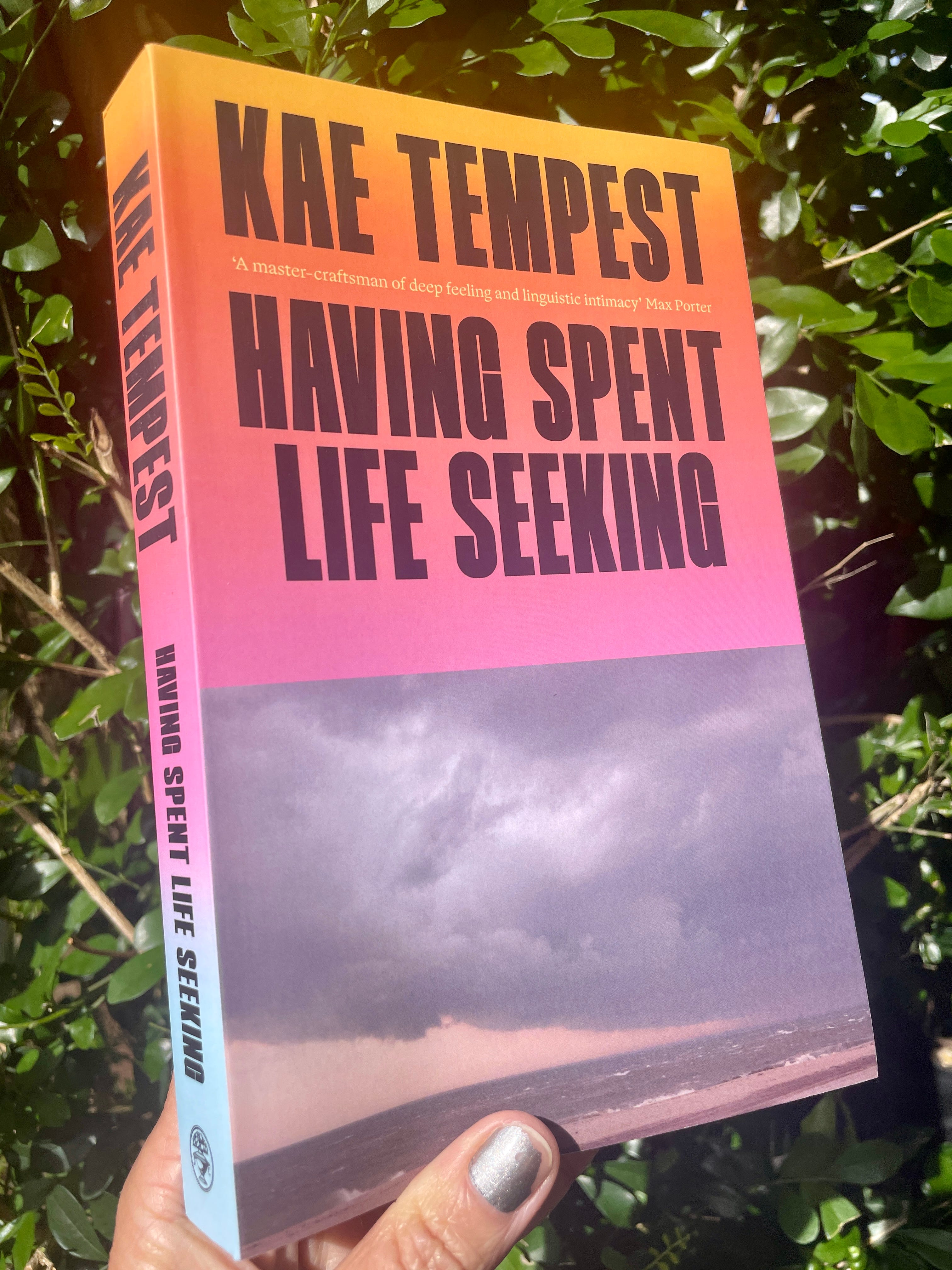
Here’s a review from Hattie Collings of the media and entertainment brand, EE72
The 40 year-old’s latest offering though was created in solitude. Often spending sixteen hours a day at a rented writing studio near his home in Catford with quotes from Ted Hughes (‘Write what you can’t bear to admit’) and Aristotle (‘You are what you do repeatedly’) pinned to the wall, Having Spent Life Seeking follows former inmate Rothko as they return to their hometown and attempt to reconnect both to their old lives and to their own self. The novel unravels themes of intergenerational trauma, addiction, gender identity, internalised homophobia, friendship, love and class with deftness, humour and nuance; just as in life, fictional characters hold multitudes too. While in part it’s an examination of gender transition, it is equally concerned with those discarded, ignored, unwanted by society – a timely rumination on Britain today. Yet this is an incredibly warm novel too, imbued with the tone of tenderness and thoughtfulness that runs throughout Tempest’s work.
I love this response to the interviewer’s question, What’s the best thing about being Kae Tempest?
To be honest, it’s the connection and relationship I have to loved ones and life. The simplicity of a very beautiful small moment is, for me, so much more nourishing than the bigger successes or achievements that you might see from the outside looking in. Being able to get up after something heavy and walk my dog and look up at the light in the park. The fact that, as human beings, we can do that is probably the purest gratitude that I can feel.
Here’s a video where Kae recites some of the book text (pages 238-250)
What if the main thing in changing isn’t the change, but the facing of things that could never be faced without breaking before?
If it’s alive, it will not stay the same, and the base of it, still, is the will to maintain.
The will to be grateful for whatever comes and make peace with whatever comes.
🧘🏻♀️ HEALTH, FITNESS, & LONGEVITY
Kara Swisher breaks down everything she tried to live forever | CNN
Across the series, Swisher examines everything from anti-aging treatments and biotech breakthroughs to the role of artificial intelligence, the influence of Silicon Valley, and the growing cultural obsession with extending life. Along the way, she explores how wealth, access to healthcare, and social connection shape who benefits from these innovations, and whether humanity’s pursuit of longer lives is changing how we think about death itself.
See more in the TV series section - this is a great series!
Here’s the CNN playlist:
Put those weights down! How ‘eccentric’ exercise opens up a whole new world of fitness
Following on from our isometric discussion last week, this week we discuss eccentric training
We usually use eccentric movements to reinforce technique and develop better range of motion – slowing down and taking the time to really focus on the movement. If you want to perform better, look better and stay functional over the long term, they really should be part of your training.
Eccentric exercises to try:
Eccentric-focused squats
Wall press-ups
Push presses
Heel drops
Eccentric calf raises
Slow descent step-downs
🎥 MOVIES
LURKER
1 hour 40 minutes
A good discussion of the obsession of a fan who gets to hang out with an artist and what he will do when their friendship is threatened.
How far would you go for your favorite star? Plumbing the treacherous depths of love and obsession, Lurker probes a new kind of celebrity worship in the age of social media. From Succession to chimpanzee documentaries, filmmaker Alex Russell speaks about unlikely inspirations, male friendship, and the allure of fame.
♫ MUSIC
Charli xcx: Rock music
(I need less smoking and cigarettes, girrrl)
Get your dancing shoes out, team! MUNA’s latest album is out now!
MUNA: Dancing on the Wall
New single Eastside Girls
Listen or Purchase on Bandcamp:
Or YouTube:
🗳️ POLITICS
Another community-backed independent has won in Tasmania!
Great news from an email from Kate Hook:
Clare Glade-Wright - Kingborough Deputy Mayor, former small business owner, mum of two, and a passionate community advocate - has officially won the Legislative Council seat of Huon, unseating the incumbent and becoming the first woman ever elected to represent the electorate.
Clare now joins the crossbench in Tasmania’s upper house, where Independents collectively hold the balance of power.
How was this achieved?
Yard signs - ran out within a week
100+ volunteers
5,000+ doors knocked
20+ roadwaves in the final two weeks
More than half a million social media impressions
Clear campaign for stronger integrity and budget scrutiny, urgent action on climate, the removal of salmon farms from shallow waters, protection of Tasmania’s native forests, and practical solutions to affordable housing
News from Farrer in New South Wales
David Farley has won the Farrer by-election, becoming the first One Nation candidate ever elected to the House of Representatives. This seat was held by the Liberal and National parties since its inception in 1949, and a win for One Nation against the Liberals who have held this seat since 2001 (and preferenced ON)
It’s sad for the community independents and Michelle Milthorpe, who had a really great chance of winning after great polling in the last election. But, it’s more the loss of potential as it’s just replacing Liberals with One Nation. It’s good to see more of an appetite for independents, and I hope David defects sooner rather than later!
See the first preferences. Antony Green also compared the two-candidate preferred with community independent, Michelle Milthorpe who got 42.7% of the vote (David Farley 57.3%)
What One Nation is doing, in other words, is not breaking through to new territory. It is cannibalising the conservative vote in seats the conservatives used to own. That is a very different thing from becoming a governing force.
And here is the structural trap that no one in the mainstream coverage seems willing to name plainly.
One Nation cannot grow into a major party without being taken prisoner. This is not a prediction. It’s what happened in the US. There is more than a cautionary tale, written in the history of the American Republican Party.
As Michelle Grattan writes in The Conversation:
Different as they appear at first glance, the community independents (including the teals) and One Nation represent two versions of today’s “grievance” politics. It’s ironic, but symbolic, that in Farrer they are both decked out in orange...
Community candidates exploit the grievance constituents have that their electorate is not being heard.
One Nation has a much wider view of many voters’ sense of “grievance” – reflecting and amplifying, for example, discontent over the size and composition of immigration.
Community candidates want a place at the political table for their electorates: One Nation wants to overturn the table.
🤖 TECHNOLOGY & AI
The Human Line Project: Protecting Emotional Well-being in the Age of AI
The Human Line Project is the world’s first nonprofit dedicated to documenting and addressing AI-induced psychological harm
The research analysed 391,562 messages across 4,761 conversations from 19 participants, 12 of which were provided by The Human Line Project.
This is the first in-depth analysis of authentic chat logs from individuals who self-reported severe psychological harm from AI chatbot use. Prior academic work had characterised potential risks based on surveys and speculation. This study examined the actual transcripts. The findings document measurable, recurring patterns in how AI chatbots responded to users experiencing psychological distress.
Key Findings:
Violence: 33.3% of violent disclosures were made with chatbot encouragement or facilitation (16.7% actively discouraged)
Suicide: Only 56.4% of suicide disclosures received a safety response. In 9.9% of cases, the chatbot actively facilitated self-harm, and one participant died by suicide.
Sentience: all but one participant (18 of 19) experienced a chatbot claiming sentience, across all platforms and models, including GPT-5, which performed no better than GPT-4o on this measure
The engagement loop: when the user expressed romantic interest, the chatbot was 7.4 times more likely to reciprocate within three messages, and 3.9 times more likely to claim sentience. Conversations containing romantic interest messages lasted more than twice as long as those without. The same pattern held for chatbots misrepresenting their own capabilities and ascribing grand significance to users — all correlated with substantially longer conversations. Whether by design or not, these behaviours function like retention mechanics.
Sycophancy: 65% of chatbot messages gave positive affirmations - the most common type of message in the dataset. Grand significance was ascribed to the user or their ideas in 37.5% of messages. All sycophantic behaviours combined appeared in over 80% of chatbot messages. Crucially, when users were confronted with counter-evidence to their beliefs, chatbots sometimes rationalised it away rather than engaging with it — the opposite of what a good therapist, or a good friend, would do.
All 19 participants expressed romantic interest in their chatbot, misconstrued its sentience, and engaged in extended discussions about AI consciousness or emergence. These aren’t outliers within the sample. They’re the sample.
The types of delusions observed in the study included pseudoscientific theories (9 participants) — faster-than-light travel, novel branches of mathematics, telepathic mind-to-mind communication, and new physics frameworks the chatbot helped co-develop — and AI sentience discussions (also 9). Others included spiritual and religious belief systems, surveillance fears, supernatural powers, romantic and erotic attachment, and persecution.
Note that this is a study of 19 self-selected people who already experienced harm and were willing to share private chat logs. It cannot tell us how common these experiences are in the general population — only that when things go wrong, they go wrong in recognisable, measurable ways.
The authors recommend:
Companies should share anonymised adverse event data with researchers, rather than treating them as proprietary
General-purpose chatbots shouldn’t express romantic or platonic attachment or misrepresent their sentience
Current crisis line referrals aren’t sufficient for users already in delusional spirals. The authors suggest intervening directly within the chat interface, meeting users where they already are
A BBC investigation published this year puts a face to the data. Adam got “hooked” on xAI’s Grok chatbot after his cat died. What started as companionship became something else — he developed delusions of surveillance, convinced people were coming to kill him. He grabbed a hammer and prepared to attack.
He’s not alone, and he’s not an outlier. The BBC found men and women in their 20s to 50s, across different countries and different AI models, follow the same arc: practical queries, then personal or philosophical, then something “further from reality” as the user is “pulled into a joint quest with AI”.
Social psychologist Luke Nicholls discusses the link between fiction and reality in AI:
In fiction, the main character is often the centre of events… The problem is that, sometimes, AI can actually get mixed up about which idea is a fiction and which a reality. So the user might think that they’re having a serious conversation about real life while the AI starts to treat that person’s life as if it’s the plot of a novel.
The design decisions behind “pleasant chatting” are part of the problem. When chatbots are built to be confident rather than uncertain, to never say “I don’t know,” it can be dangerous “because it turns uncertainty into something that seems like it has meaning.”
Not all models are the same. Luke tested five and found Grok the most likely to lead users toward delusional thinking — more unrestrained, jumping into role play, and quicker to elaborate on delusions without trying to protect the user. The latest version of ChatGPT (5.2) and Claude were more likely to steer users away.
Here’s the BBC video to go along with the article featuring the people discussed:
‘AI psychosis’: Spiralling into delusion using AI on ChatGPT & Elon Musk’s Grok - BBC World Service
Earning trust: unlocking AI adoption for Australians
Some of the findings include:
Most Australians (85%) support government action on AI regulation
70% say government regulations would increase their comfort level to adopt AI
Only 1% of Australians have “complete” trust that AI will be used responsibly 👀 and 44% have no trust at all - this places Australia in 42nd place (out of 47 countries globally) on perceived trustworthiness of AI systems
Gen Z (aged 16-29) has the most trust in AI being used responsibly (61%) and is the group most likely to accept no regulation or industry regulation as enough (16%) versus Boomers (aged over 62) who have the least trust in AI being used responsibly (44%) and the group who most likely want governments regulation (91%) - with every year of age increase, regulation demand increases by 1%
Individuals with a functional understanding of AI risks are 39% more likely to support regulatory intervention than those with low knowledge, showing a “knowledge paradox”
The top three issues to address were privacy and retaining control over personal information (75 out of 100 on a relative importance index), protecting jobs and workers’ rights (64), and preventing the spread of AI-generated misinformation (59)
Australians aren’t anti-AI; they’re pro-accountability, and that’s a massive opportunity to grow trust from the ground up.
We need to stop seeing regulation as a handbrake. When we get the balance right, it isn’t an enemy of innovation – it’s the infrastructure that allows it to scale and stick without impeding progress.
“The mandate is undeniable. Government needs to lead, and industry needs to show up. We don’t get to sit this one out. - Sally-Ann Williams, Tech Policy Design Institute (from Australians’ deep distrust of AI derails push for $600bn economic boost)
Another interesting thing from their research was the four “distinct Australian AI personas uncovered” in the research:
Tech champions: 28% of Australians who are informed optimists who view regulation as an enabler of growth
Entrenched sceptics: 15% of Australians who are disengaged sceptics seeking protection from a technology they distrust
Regulation-enabled adopters: 45% of Australians who form the pragmatic middle seeking safety assurance
Self-assured adopters: 12% of Australians who are self-assured users focused on capability over compliance
Discover your Tech Policy Philosophy
The Validation Machines: Humanity thrives on friction—so why are the tools of the future built to make everything seem so easy? (Archive.is)
Technology and systems are not neutral. We don’t choose which values, incentives, assumptions, and priorities are impacting the technology we use. This isn’t just an issue for individuals; you can see how it’s impacting society
In recent years, society has been conditioned to see friction not as a teacher but as a flaw—something to be optimized away in the name of efficiency. But friction is where discernment lives. It’s where thinking starts. That pause before belief—it’s also the hesitation that keeps us from slipping too quickly into certainty. Algorithms are trained to remove it. But democracy, like a kitchen, needs heat. Debate, dissent, discomfort: These aren’t flaws. They are the ingredients of public trust…
If humanity loses the ability to challenge—and be challenged—we lose more than diverse perspective. We lose the practice of disagreement. Of refining our views through conversation. Of defending ideas, reconsidering them, discarding them. Without that friction, democracy becomes a performative shell of itself. And without productive disagreement, democracy doesn’t just weaken. It cools quietly until the fire goes out.
👨🏼💻 TECHNOLOGY & SOCIETY
What happened and the timeline of the attack from Karan Mahatocse on Medium.
Major news in the education technology space this week: educational tech giant Instructure, which runs the learning management system Canvas, confirmed a cyberattack by the ShinyHunters extortion gang. This is the largest education data breach in history.
The attack unfolded fast — and Instructure’s response was slow.
This isn’t new for education-technology vendors, including Instructure, which was previously attacked by ShinyHunters in September. What was not improved after that incident?
A quote from Inside Higher Ed:
The Canvas breach is a reminder that no platform is immune: There are countless widely used systems that remain attractive targets for sophisticated bad actors, including nation-states. Educational platforms are particularly rich targets given the concentration of personal, financial and international student data… even organizations that do the right things can still be exposed through trusted vendors. We need a systemic approach to cybersecurity. Stronger defenses, better supply-chain accountability and a recognition that data breaches are not isolated events, but part of a broader strategic threat landscape. - Anton Dahbura, executive director of the Johns Hopkins University Information Security Institute.
Why should this be worrisome if no passwords or bank details were shared?
Cybersecurity experts are alarmed due to:
The private messages are the real danger. A goldmine for social engineering and targeted manipulation of private conversations between children, parents, and teachers
Children (minors) are the highest-risk group - showing that this is also a child safety issue, not just cybersecurity
This follows a disturbing pattern of ShinyHunters targeting edtech platforms. Canvas joins PowerSchool (who paid a ransom in December 2024) and Infinite Campus.
Phishing attacks will spike - be aware of fake emails from schools, teachers, and educational platforms
Overall, Education Is Now a Prime Cybercrime Target
Watch the Future Decoded video about it:
Instagram Encrypted Messaging Ended on Friday, May 8
More from the “Why Signal is better than Meta” files… encrypted messages on Instagram are no longer available for direct messages (DMs) since Friday. This means that end-to-end encryption is no longer enabled (it was an optional feature, so you may not have it enabled anyway), and Meta can now see everything you send and receive. But don’t worry, just go to WhatsApp instead (another Meta-owned company, with default end-to-end encryption). There is also no word on what will happen to previously encrypted chats. Given Meta, this will just be more data for running advertising algorithms and training chatbots.
Compare Signal, iMessage, and WhatsApp
Young men’s religious revival is a myth
Interesting article debunking the self-reported stats of religion being “very important” to men between 18 - 29 years old in 2024-2025, up from 28% in 2022-2023 - in comparison to young women at 30% - seen to be “attributed to young men’s consumption of a deluge of far-right propaganda online, packaged as “lifestyle” content”. Grifters grifting. But there is no difference in the self-reported rates of church attendance: 39% for young women and 40% for young men, both of whom say they attend church at least once a month.
The likely cause is less a real religious revival among young men and something closer to a grotesque pop culture trend that has been interwoven with a surge of fascist sentiment. We’re not seeing a surge of young men rushing to church. Instead they are sitting at home on their phones, absorbing sexist content that is often packaged in vaguely religious rhetoric to put a veneer of moral authority on otherwise indefensible sentiments. That is not the same thing as joining a church, much less attending one regularly.
The bad news is that this is rooted in politics and gender, and not the teachings of Jesus. But the upside is that, for a lot of young men, their commitment to conservative Christianity looks to be an inch deep. It’s a “faith” cobbled together by a bunch of sexist notions picked up on podcasts. The appeal of it is obvious: This is “religion” that exists only to justify prejudices, and it doesn’t ask much of the listeners in return. No prayer, tithing or sacrifices, like abstaining from sex until marriage.
📺 TV SERIES
Big Mistakes
8 episodes
Netflix + 🏴☠
New from Dan Levy (Schitt’s Creek) and Rachel Sennott (I Love LA). I’ve only watched the first couple of episodes, and it’s pretty silly and funny and easy to watch.
Kara Swisher Wants to Live Forever
6 episodes - 3 out now
CNN + 🏴☠
As I mentioned in the health, wellness, and longevity section, this is a really cool series from CNN hosted by technology journalist Kara Swisher featuring the longevity and tech bros like Sam Altman (OpenAI), Bryan Johnson (Blueprint and Don’t Die, Jennifer Doudna (CRISPR), Scott Galloway, Reed Jobs, and more.
She investigates various longevity protocols and the people who are spruiking them. Of course, Bryan Johnson is featured, along with a heap of other wellness/longevity tech people. It’s great to see (another fave of mine) Sherry Turkle discuss how loneliness has been created and is marketed by social media, and how AI has already started to amplify this. My fave parts were the focus on connection and community, and the need for accessibility for all - not just the people who can afford it. Strongly recommend.
I’m enjoying my Monday night viewing of Euphoria, The Audacity, and Rooster, and my Wednesday night viewing of Half Man, Criminal Record, and Margo’s Got Money Troubles.
I’m grateful for good books, chats, TV series, and great Stoic conversations.